How Bengali Festivals Are Quietly Changing Canadian Multiculturalism
Nobody announced it. There was no press release, no government campaign. It happened slowly, the way most real cultural shifts do through food stalls, borrowed community halls, and families who refused to leave their traditions behind when they crossed an ocean.
Bengali festivals are now part of Canadian city life. Not on the edges. Increasingly, at the centre.
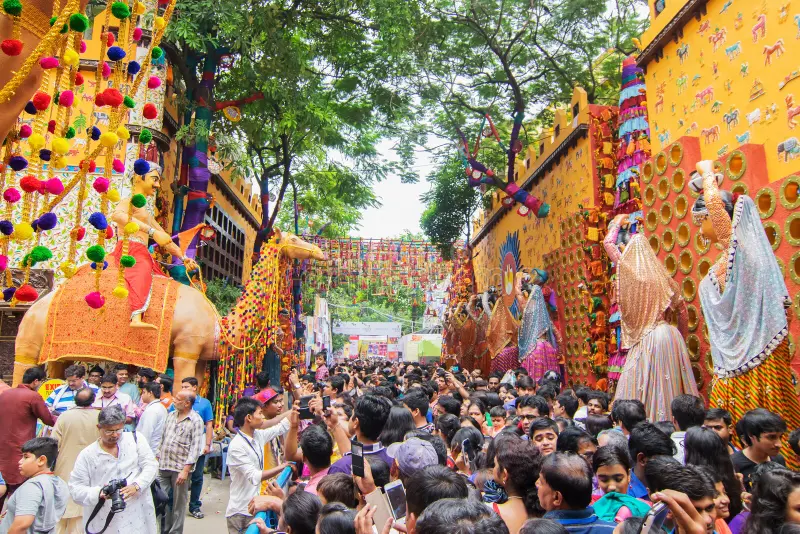
Durga Puja: From Living Rooms to City Landmarks
Twenty years ago, Durga Puja in Canada meant a rented gymnasium, a handmade idol, and maybe two hundred people who all somehow knew each other.
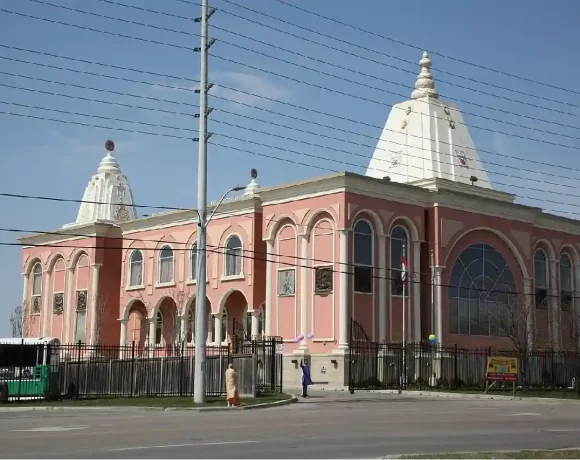
Today it looks different. In Toronto, Mississauga, Calgary, and Vancouver, Durga Puja pandals draw thousands of visitors, Bengali and non-Bengali alike. Local politicians attend. City councillors send official greetings. In some years, municipal grants have helped fund the events.
The idol craftsmanship has improved too. Artisans are now flown in from West Bengal. The dhak drums, the anjali, the sindoor khela none of it has been watered down to make outsiders comfortable. If anything, it has become more itself, more confident, because the community is no longer performing for survival. It is celebrated because it belongs here.
Non-Bengali Canadians are showing up curious and leaving. That is not an accident. That is culture doing what culture does when it is given space.
Eid: Community Prayers That Spill Into City Streets
The Bengali Muslim community in Canada is large and growing and Eid here has taken on a scale that surprises even those who grew up with it back home.
Prayer gatherings in cities like Toronto and Edmonton fill convention halls and open grounds. The food that follows is a full event on its own: biryani, roasted meat, sweets, and the kind of generosity that does not check whether you are Muslim before handing you a plate.
Canadian neighbours, coworkers, and friends are being invited in. Many are accepting. That quiet exchange, sharing a meal on a day that matters deeply to someone else, is doing more for multicultural understanding than most formal programs ever manage.
Poila Boishakh: Bengali New Year Finds Its Place
Poila Boishakh, the Bengali New Year, is perhaps the most underrated of the three. It carries no religious requirement, which makes it the most openly welcoming.
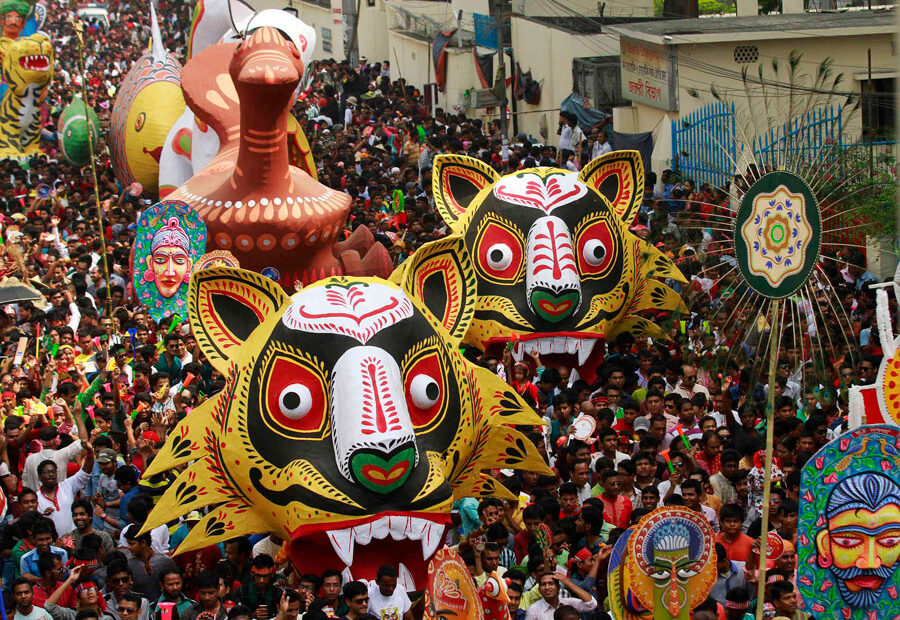
Street fairs, cultural performances, traditional clothing, and community meals have become the format in cities with established Bengali populations. In some neighbourhoods, local schools and libraries have begun acknowledging the occasion. That recognition matters more than it sounds.
When a child sees their culture named and respected in a public space, something shifts for them. They carry themselves differently.
What Is Actually Changing
Canadian multiculturalism has always been a policy. What Bengali festivals are adding is feeling the texture, the noise, the colour that turns a policy into something people actually experience.
The change is not loud. But it is real, and it is not going back.